Made for the laboratory environment where accuracy is needed, the heating circulating water bath ensures effective temperature maintenance and smooth heat exchange. Its intelligent control panel makes easy programming of settings and real-time temperature monitoring possible. The inner compartment, made of top-quality stainless steel, withstands corrosion and chemical stains. The heating circulating water bath is quiet, energy-conserving, and constant in performance regardless of continuous operation. Its built-in protection features avoid overheat and guarantee the safety of the user. Simple to maintain and energy efficient, the heating circulating water bath enhances laboratory productivity and experimental reproducibility.

The heating circulating water bath finds application wherever reproducible experimental findings are needed in controlled heating. In life science, it maintains enzymes and samples at specific temperatures during incubation. In small chemical labs, it is utilized to evaporate solvents, crystallize materials, and investigate the rate of reactions. School laboratories also employ the heating circulating water bath in teaching vital laboratory concepts. Its even heat ensures that laboratory specimens are treated uniformly for higher accuracy in data. The heating circulating water bath helps maintain consistency in research, enabling scientists to achieve stable conditions necessary for precise analysis.
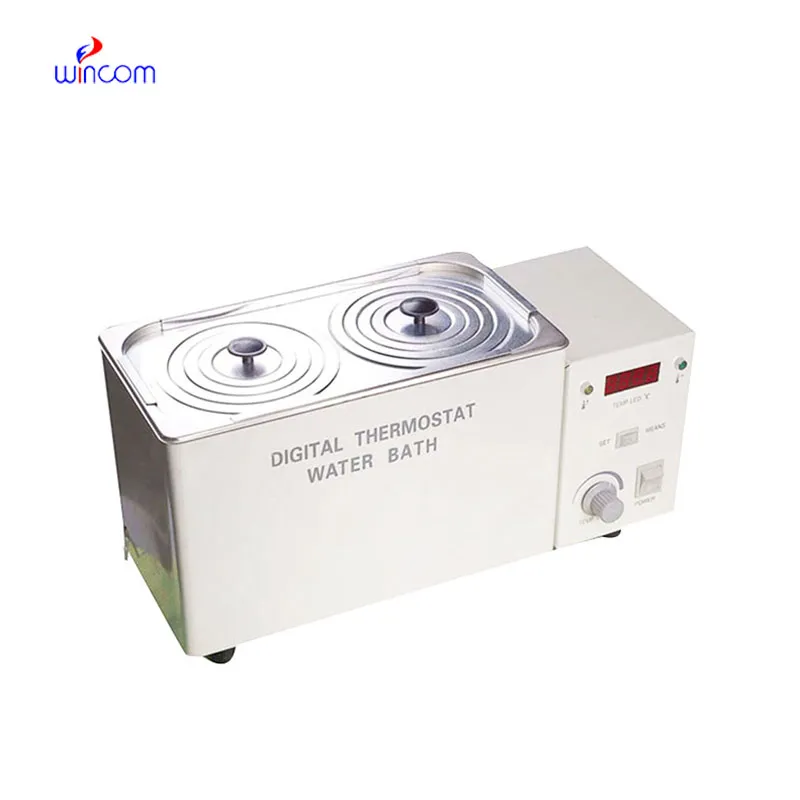
New technologies are shaping the future of the heating circulating water bath, making them faster, smarter, and greener. Advanced temperature mapping will enhance consistency, while AI-powered analytics will maximize performance based on experimental data. Lab management software compatibility will enable remote control and automatic reporting. The heating circulating water bath will also be built to utilize recyclable materials and energy-saving features. All these new features will make it an integral part of laboratories which need precision, efficiency, and reduced environmental impact.
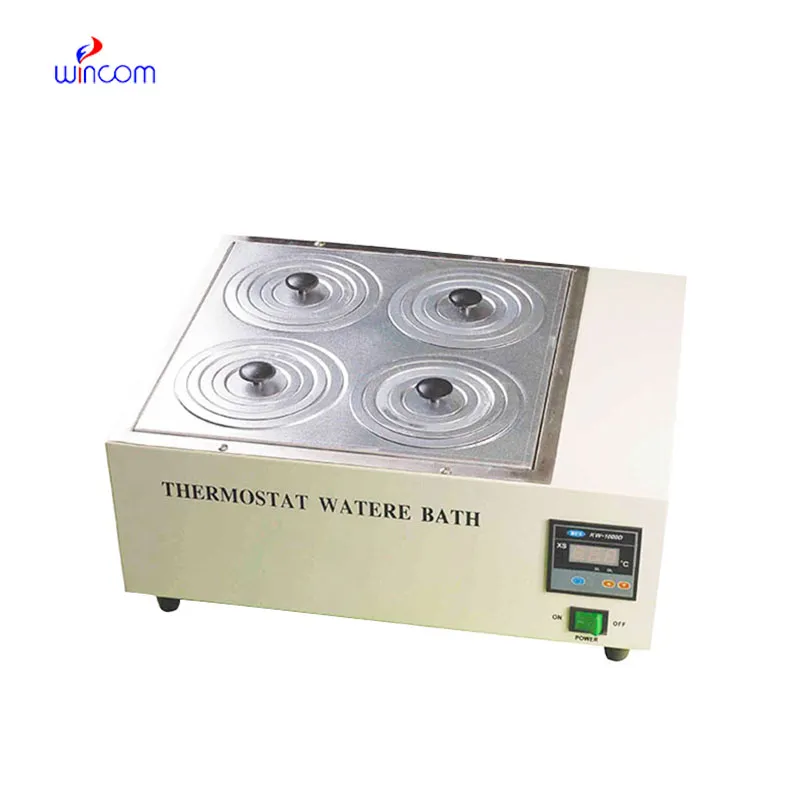
Monitoring of usage and regular cleaning are required to keep the heating circulating water bath. The water must be replaced at intervals to prevent microbial growth and ensure purity. Drain and dry the tank thoroughly before prolonged periods of inactivity. Clean with soft sponge and non-corrosive cleaner in order to preserve the integrity of the metal chamber. Inspect thermostats and electrical elements for any deviation. Proper ventilation around the heating circulating water bath also helps to provide proper temperature control. Prompt maintenance guarantees long-term reliability and stable performance.
A heating circulating water bath is an easy way to have constant temperatures for a number of laboratory applications. It possesses a heating element and thermostat to maintain the water at a level chosen by the user. Scientists rely on the heating circulating water bath for incubation, chemical reaction, and sample heating operations that require accurate temperature control. The gentle circulation of the water prevents hot spots and cold spots from occurring, providing uniform heat transfer. Constructed with a strong outer casing and safety mechanisms, the heating circulating water bath is a workhorse for routine and specialized lab procedures.
Q: Can a water bath be used for enzyme incubation? A: Yes, water baths are frequently used for enzyme incubation, as they provide precise and stable temperature conditions necessary for biological reactions. Q: How does a digital water bath differ from an analog one? A: A digital water bath offers programmable controls and precise temperature readings, while analog models rely on manual adjustments and thermometers. Q: What maintenance steps extend the life of a water bath? A: Regular cleaning, using distilled water, checking the thermostat, and drying the chamber after use all help maintain performance. Q: Why do some water baths have lids or covers? A: Lids help reduce heat loss, prevent contamination, and minimize evaporation, maintaining consistent internal temperatures. Q: What should be done if a water bath fails to heat properly? A: Inspect the power supply, thermostat, and heating element; if the issue persists, discontinue use until professional servicing is performed.
This ultrasound scanner has truly improved our workflow. The image resolution and portability make it a great addition to our clinic.
The hospital bed is well-designed and very practical. Patients find it comfortable, and nurses appreciate how simple it is to operate.
To protect the privacy of our buyers, only public service email domains like Gmail, Yahoo, and MSN will be displayed. Additionally, only a limited portion of the inquiry content will be shown.
Could you please provide more information about your microscope range? I’d like to know the magnif...
Hello, I’m interested in your centrifuge models for laboratory use. Could you please send me more ...
E-mail: [email protected]
Tel: +86-731-84176622
+86-731-84136655
Address: Rm.1507,Xinsancheng Plaza. No.58, Renmin Road(E),Changsha,Hunan,China


 EN
EN
 af
af
 es
es
 ar
ar
 tr
tr
 sw
sw
 pt
pt
 th
th
 ur
ur
 bn
bn
 ne
ne
 vi
vi
 km
km
 lo
lo
 de
de
 ru
ru
 fi
fi
 nl
nl
 fa
fa
 fr
fr
 ko
ko