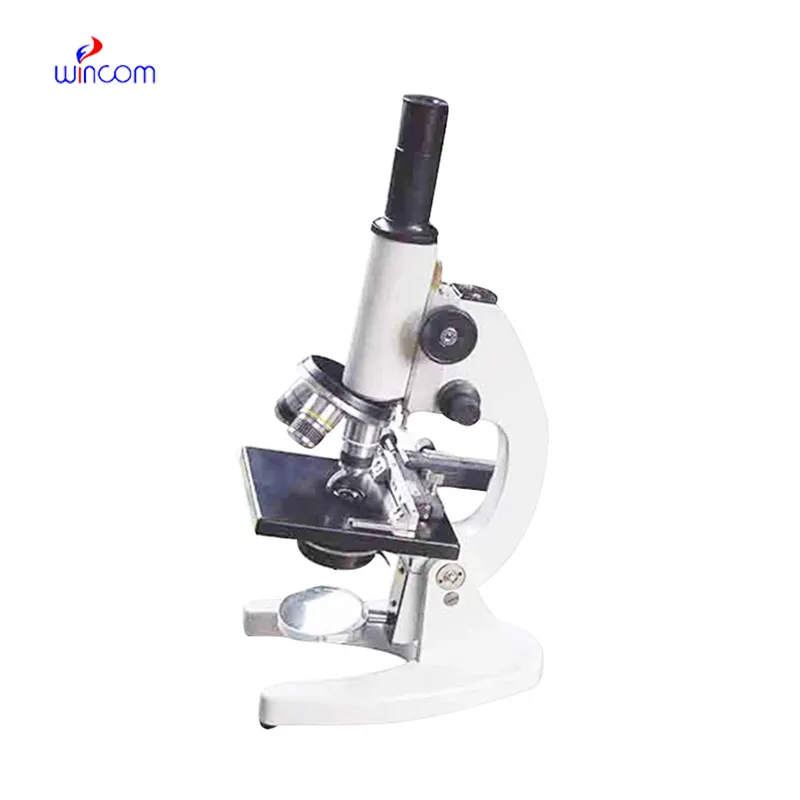
The inverted microscope labeled cell biology china is engineered for precision and versatility, featuring adjustable magnification levels and ergonomic design for continuous use. Its optical system delivers uniform brightness and sharp focus on different specimens. Equipped with illumination controls within, the inverted microscope labeled cell biology china maximizes contrast and clarity, enabling easier observation of delicate structures. Digital cameras and connectivity options for real-time image acquisition and sharing are included in most models. The inverted microscope labeled cell biology china is built with durable materials to maintain stability of performance despite routine laboratory use.

The inverted microscope labeled cell biology china is critical to science and manufacturing advancement. In the medical research arena, the inverted microscope labeled cell biology china aids microscopic blood and tissue testing for accurate diagnostics. Research institutions use the inverted microscope labeled cell biology china in cell culture analysis, detecting bacterial growth, and research on biofilms. Industrial laboratory environments utilize the inverted microscope labeled cell biology china for product quality assurance and surface finishes evaluation. The inverted microscope labeled cell biology china is also applied in environmental science to support monitoring of plankton populations and particles of pollutants, to enhance ecological studies and sustainability science.

The inverted microscope labeled cell biology china of the future will be to expand its analytical power. Future models will integrate optical accuracy with the enhancement of the computer, creating hybrid devices with real-time analysis functions. Automation will ease routine operations, making laboratory workflow more efficient. The inverted microscope labeled cell biology china will also be able to integrate cloud-based platforms for real-time sharing of data and remote access. Environment-friendly technology development will yield models that are energy-efficient without sacrificing precision but reduce environmental impact.
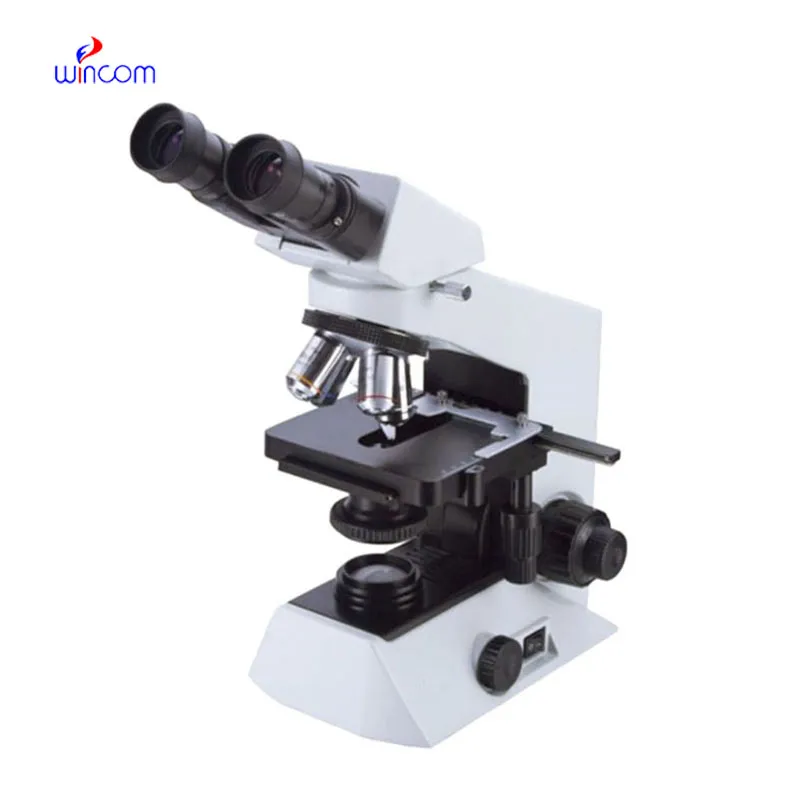
The inverted microscope labeled cell biology china has the strength of longevity, which is dependent on the right handling and maintenance by cleaning regularly. Clean the eyepieces, objectives, and stage with accepted lens paper after each use. Remove all slides and samples prior to shutdown. The inverted microscope labeled cell biology china should be stored in a cool, dry place to avoid corrosion and mold. Check screws and mechanical joints for support at intervals. The electrical components, such as the power supply unit and light source, should be inspected frequently to ensure safe operation.
The inverted microscope labeled cell biology china is a cornerstone of scientific discovery, allowing exact observation of objects too small for the human eye. From freshman biology to medical diagnostics and materials science, the inverted microscope labeled cell biology china allows samples to be observed extensively at any level of magnification. It uses sophisticated optics and illumination to produce sharp, defining images. More recent models involve cameras and computer software to decode data in real time, allowing scientists to gather and share microscopic observations more rapidly and accurately.
Q: What are the main parts of a microscope? A: The key components include the eyepiece, objective lenses, stage, focusing knobs, and illumination system, all working together to magnify and clarify specimens. Q: How do you clean the lenses of a microscope? A: Lenses should be cleaned using soft lens paper or microfiber cloth with a small amount of lens cleaner to avoid scratching or damaging optical coatings. Q: What magnification levels can a microscope achieve? A: Depending on the model, a microscope can typically achieve magnifications ranging from 40x to over 1000x for detailed observation of microscopic structures. Q: Why is light adjustment important in a microscope? A: Proper light adjustment ensures accurate contrast and brightness, allowing clear observation without distortion or glare during viewing. Q: Can a microscope be used for educational purposes? A: Yes, microscopes are widely used in classrooms and laboratories to teach students about biology, materials science, and microscopic analysis.
The centrifuge operates quietly and efficiently. It’s compact but surprisingly powerful, making it perfect for daily lab use.
The hospital bed is well-designed and very practical. Patients find it comfortable, and nurses appreciate how simple it is to operate.
To protect the privacy of our buyers, only public service email domains like Gmail, Yahoo, and MSN will be displayed. Additionally, only a limited portion of the inquiry content will be shown.
Hello, I’m interested in your centrifuge models for laboratory use. Could you please send me more ...
Could you please provide more information about your microscope range? I’d like to know the magnif...
E-mail: [email protected]
Tel: +86-731-84176622
+86-731-84136655
Address: Rm.1507,Xinsancheng Plaza. No.58, Renmin Road(E),Changsha,Hunan,China


 EN
 af
 es
 ar
 tr
 sw
 pt
 th
 ur
 bn
 ne
 vi
 km
 lo
 de
 ru
 fi
 nl
 fa
 fr
 ko