In clinical and laboratory settings, vital sign monitors is a primary tool for monitoring cardiac activity and vital signs. The device presents the ECG waveform very lucidly, which helps thorough patient assessment. Its stable functioning and organized data output have made it appropriate for daily operation in hospital wards where constant and accurate monitoring is necessary for patient care and clinical records.

For the purpose of collecting controlled data, vital sign monitors are used in physiological research conducted in hospital laboratories. During the clinical studies, ECG monitoring helps to observe the cardiac responses of the patients and thus the accuracy of the research is increased. Consequently, this application facilitates the research accuracy and also helps the medical laboratories and research centers affiliated with hospitals maintain the consistency of their data.
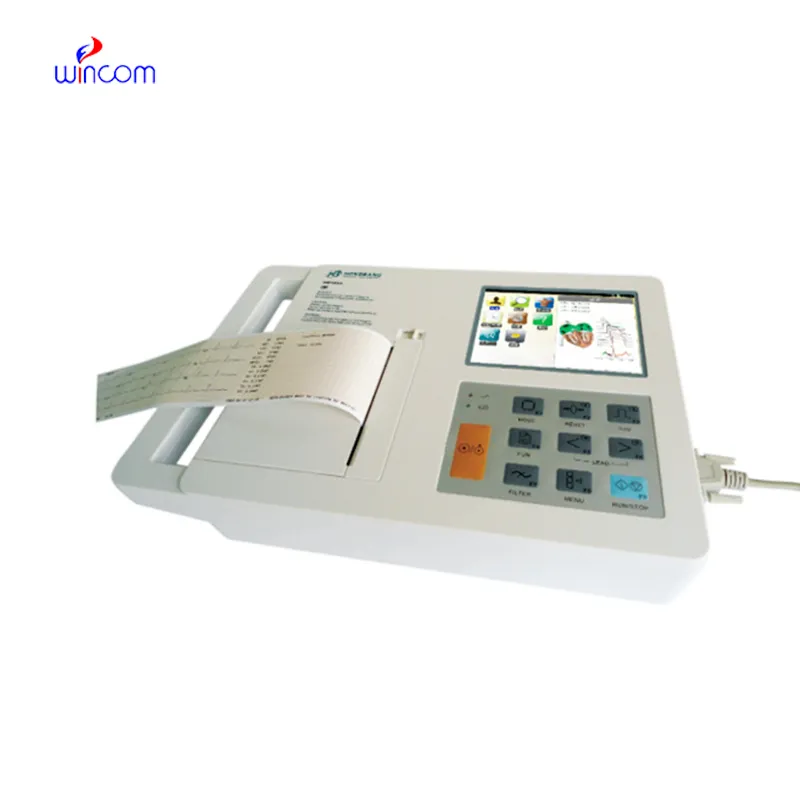
In the coming times, vital sign monitors will become more important in the remote and hybrid care scenarios. The hospital networks might not only do the ECG monitoring in the traditional patient bedside settings but also through the centralized control rooms, where the data is reviewed. This move will ensure that the medical staff keep an eye on different locations at the same time and that the monitoring standards are the same throughout the hospitals.
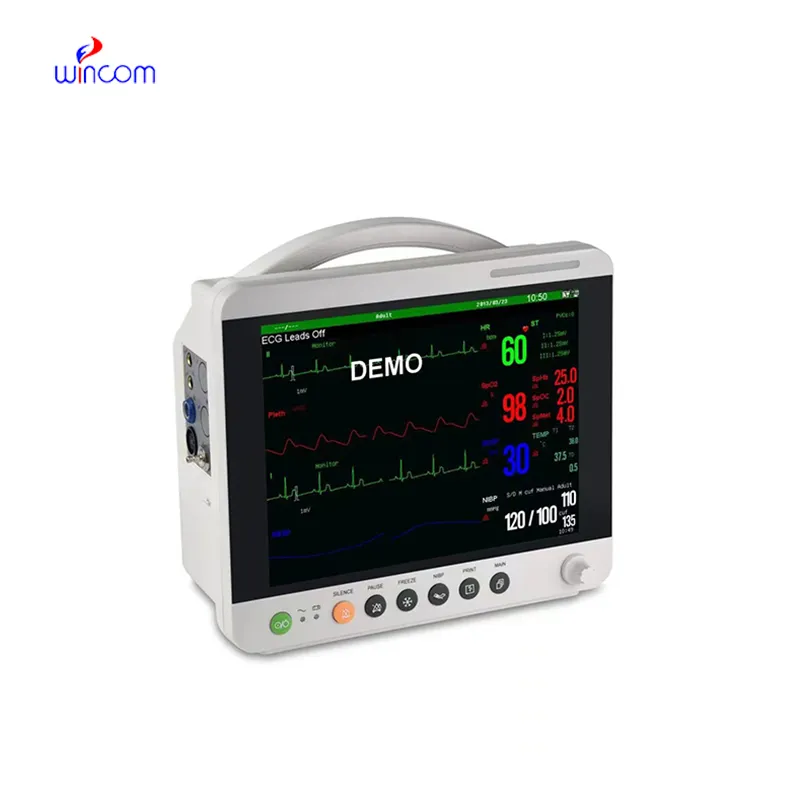
The regular upkeep of vital sign monitors comprises the cleaning of outer surfaces, the checking of electrode quality and the viewing of connection cables. It is also necessary to update the device's firmware and software to retain compatibility and accuracy of alarms. In addition, the environmental factors such as room temperature and electromagnetic radiation should be closely watched to avoid any interference with data. By following the systematic maintenance protocols, the hospital personnel make sure that vital sign monitors provides accurate and reliable monitoring of patients in different places like wards, recovering units, and laboratories, supporting the uninterrupted observation by the clinical staff.
In the educational and training settings of hospitals, vital sign monitors is a tool that shows the live monitoring of vital signs. ECG tracing and patient values are taught to be interpreted by the medical students and clinical personnel together with the simulated and actual clinical situations. The application of this technology aids the growth of competencies, increases the comprehension of diagnosis, and solidifies the use of uniform monitoring in health care teaching.
Q: What are the different kinds of signals that a Patient Monitor & ECG can identify? A: It identifies electrical cardiac signals, heart rate, arrhythmias, and often additional vital signs. Q: In what way does a Patient Monitor & ECG facilitate surgical interventions? A: It guarantees uninterrupted monitoring of the heart's activity during anesthesia and surgery. Q: Should one undergo training in order to use the Patient Monitor & ECG device? A: A very basic training course will make sure the ECG waveforms are interpreted correctly and the device is handled well. Q: Is there a possibility to connect it with hospital information systems? A: Yes, quite a number of models provide the possibility of connecting for the purpose of centralized data monitoring and analysis. Q: What is the maximum duration for which a Patient Monitor & ECG can be used without stopping? A: Generally, the manufacturers of the most devices design them to be used for the long term with the right maintenance and power management.
This ultrasound scanner has truly improved our workflow. The image resolution and portability make it a great addition to our clinic.
We’ve used this centrifuge for several months now, and it has performed consistently well. The speed control and balance are excellent.
To protect the privacy of our buyers, only public service email domains like Gmail, Yahoo, and MSN will be displayed. Additionally, only a limited portion of the inquiry content will be shown.
Hello, I’m interested in your water bath for laboratory applications. Can you confirm the temperat...
Could you share the specifications and price for your hospital bed models? We’re looking for adjus...
E-mail: [email protected]
Tel: +86-731-84176622
+86-731-84136655
Address: Rm.1507,Xinsancheng Plaza. No.58, Renmin Road(E),Changsha,Hunan,China


 EN
EN
 af
af
 es
es
 ar
ar
 tr
tr
 sw
sw
 pt
pt
 th
th
 ur
ur
 bn
bn
 ne
ne
 vi
vi
 km
km
 lo
lo
 de
de
 ru
ru
 fi
fi
 nl
nl
 fa
fa
 fr
fr
 ko
ko